Each year, many children have their lives altered by the devastating effects of child abuse. Stepping Stones, a Family & Children’s Center program, is a safe and comfortable place where children are interviewed about possible abuse and neglect. The experienced staff will work to put the children at ease and make them feel comfortable, all while significantly reducing the trauma and stress experienced by the children and their families during the investigative phase.
How Child Advocacy Centers Help Kids
View this short video for more information on Child Advocacy Centers.
What happens at Stepping Stones?
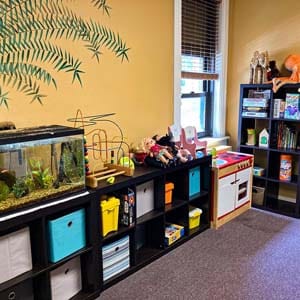
Families and children are referred to Stepping Stones by either law enforcement or child protective services due to allegations of child abuse or neglect. The children and caregiver(s) will be greeted by Stepping Stones staff and guide them into the family room.
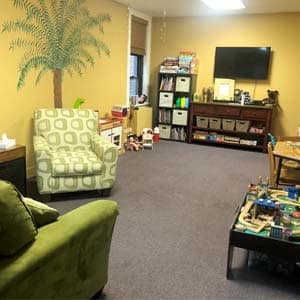
Family Room
Our trained forensic interviewer will greet the child and caregiver before the interview takes place. Then the forensic interviewer will bring the child into the forensic interview room to start the interview.
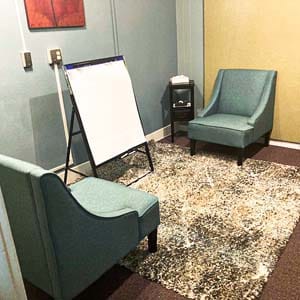
Interview Room
During the interview, it will be the interviewer and child ONLY. In the room next door will be the additional Multi Disciplinary Team (MDT) members watching the interview at the same time.
Observation Room
(MDT) members sit in an adjacent room to the Interview Room allowing them the opportunity to provide real-time feedback during the interview process.
Hand Print Hallway
After the forensic interview your child will be brought back into the family room and given the opportunity to put their hand print on the boards in the hallway.

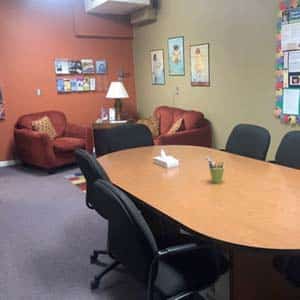
Conference Room
During the forensic interview, the caregiver will meet with a family advocate in either the family room or in the conference room.
Explanation of a Forensic Interview
A forensic interview uses the ChildFirst Protocol to obtain detailed information about a possible event that the child may have experienced or witnessed. This information is gathered at Stepping Stones as part of an investigation in collaboration with law enforcement, child protective services, district attorneys, and medical staff. This reduces the number of times a child will be asked questions and provides sufficient evidence to the investigation. The forensic interviewer is trained on how to talk to children about difficult situations and acts in the best interest of the child. The interview is child-sensitive, non-threatening, and structured to help the child talk about what may have happened to them. The forensic interviewer screens for all types of harm within each interview.
Family Advocacy
A family advocate is a compassionate specially trained professional, who provides support to families in a way that fits every family’s needs. They are there to help support and answer any questions a caregiver may have. The family advocate helps a caregiver understand more about the process of the forensic interview and assessed needs of the family first hand. The family advocate will provide information about abuse, how it may affect the child and family, how to support a child who has been abused, and how to help yourself and family members. The family advocate works with many different individuals in the community and is able to make referrals for children and family members as well. This individual can be as involved or uninvolved as a non-offending caregiver wants.
Some common tasks a family advocate does with a family:
- Help fill our paperwork
- Assess child’s safety
- Help the caregiver understand the process of the investigation
- Provide referrals to therapist or other community resources
- Provide advocacy during court trials
- Update families on the investigation
- Find resources that apply to the family’s needs
- Help set up needed medical appointments pertaining to the investigation
FAQs
Ready to Get Started?
If you have any questions or wish to speak to someone at Family and Children’s Center’s Stepping Stones, call (608) 668-2288.